Scaling UX maturity through training and experiential learning
Trained over 400 employees in UX practices to help the organization make faster, confident, data-driven decisions
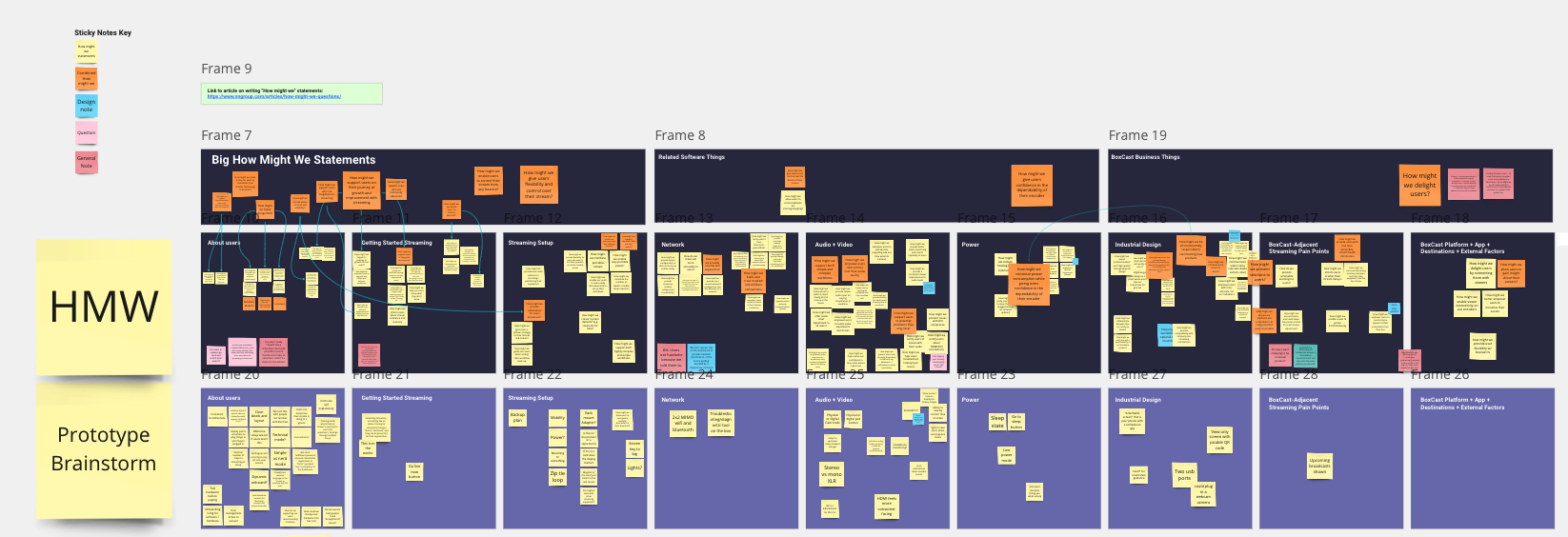
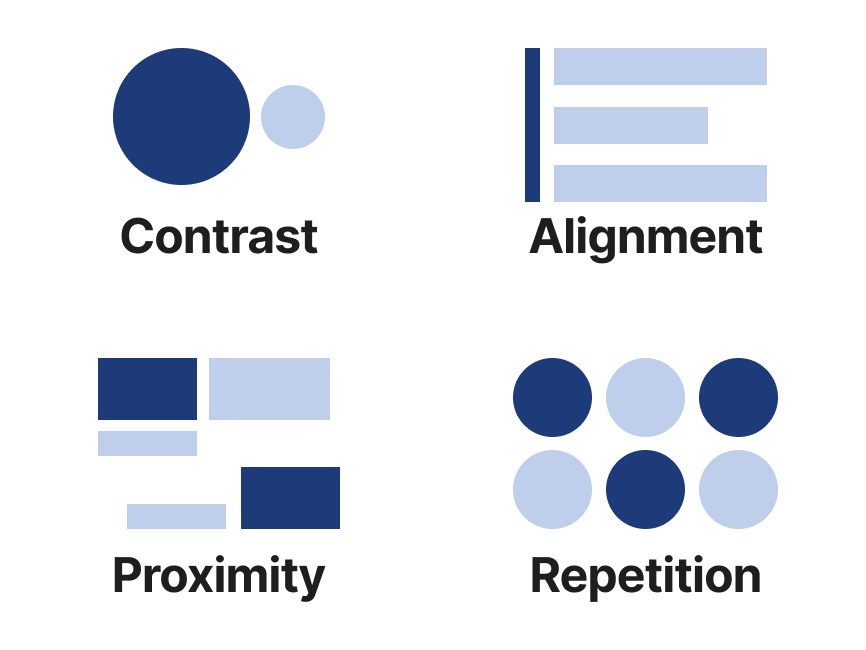
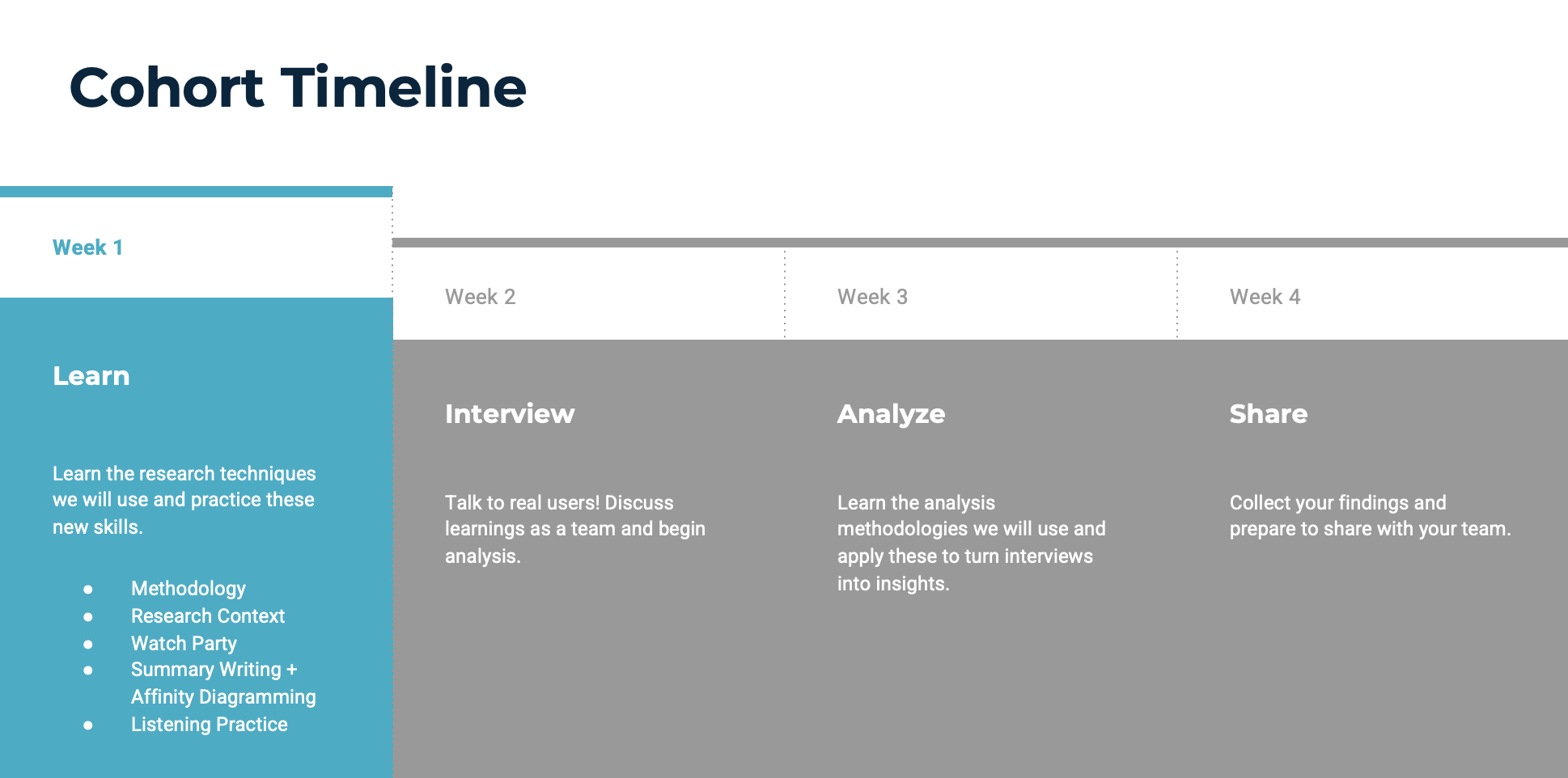
Screenshots from various workshops and trainings
Overview
Throughout my career, my goal in any organization has been simple: create a deep, shared understanding of our customers, business, and practices to drive innovation. I’ve seen firsthand that without a shared language or framework, even powerful customer insights remain siloed. UX becomes a specialized function instead of an organizational capability and part of everyone’s responsibility.
To address this in my latest role, I designed and led a scalable UX enablement program. Combining immersive training, experiential learning, and workshop facilitation, I transformed how teams understand and apply user-centered thinking. To do this, I developed and delivered:
12 curated UX training programs
Custom workshops tailored to business needs
Dozens of short-form presentations and Lunch & Learns
400+ people trained across multiple disciplines
The result: stronger cross-functional collaboration, faster releases, reduced risk, and more confident, data-informed decision-making.
Lead CX / UX Specialist
Role
Training Creation & Facilitation, Workshop Facilitation, Team Assessment, Material Creation, Training Marketing
Responsibilities
Federal Leadership: Solutions Executive Leadership, Solution Architecture Management
UX Contract Team: UX Designers and Researchers
Solutions Development Teams: Product Owners, Engineers, Business Analysts, Account Executives
Stakeholders
2-3 weeks per training or workshop, 1-2 months per immersive training project; 1 week per short form presentation
Timeline
Challenge
In growing organizations, customer insights are often generated, but not consistently operationalized. Common barriers included:
No shared language around UX or CX
Limited trust in research or testing outputs
Siloed decision-making across verticals
Misalignment between leadership, product, and customer teams
Hesitation to adopt new practices due to lack of understanding
People won’t commit to what they don’t understand or trust.
Training, especially personalized and situationally relevant training, became my vehicle to build trust, increase adoption, and accelerate impact.
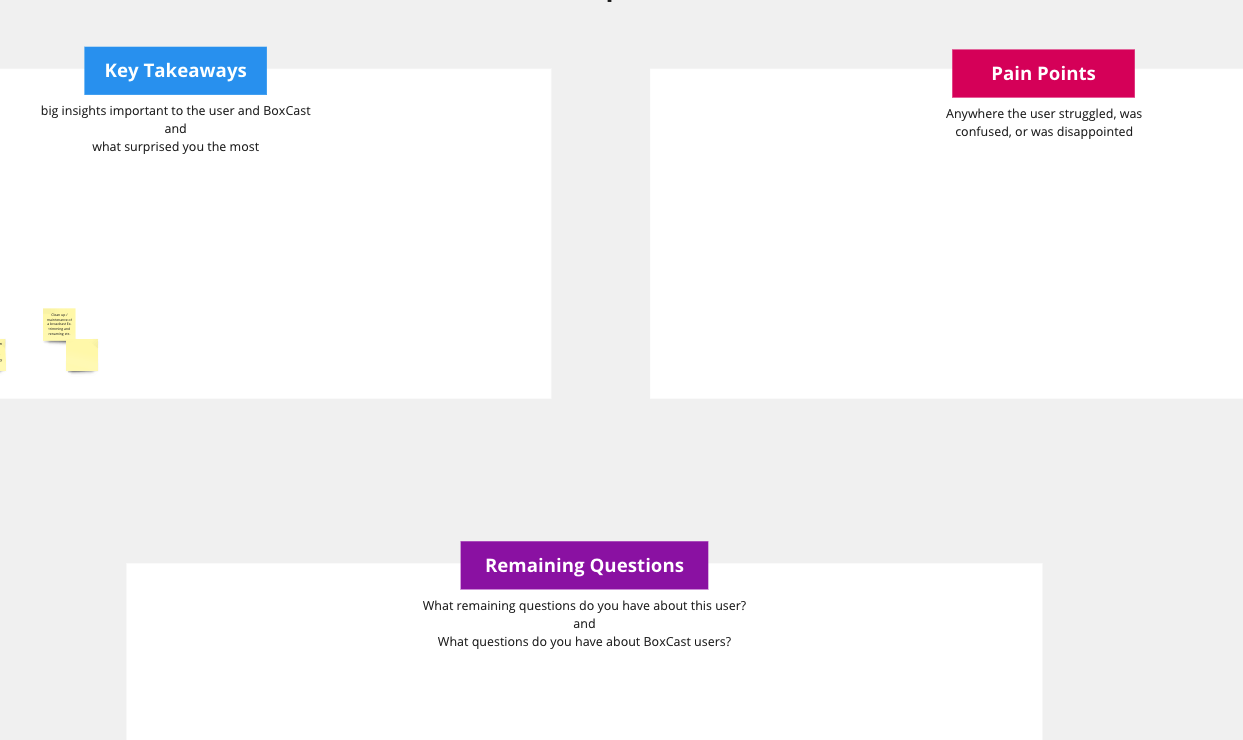
Collaboration whiteboard used for a UX Watch Party where people watch a research session and discuss afterward
Goals
Create a shared UX/CX foundation across disciplines
Build trust in research and testing practices
Increase organizational capacity without increasing headcount
Enable faster, higher-quality releases through data-driven decisions
Reduce risk on expensive or experimental initiatives
Transform UX from a function into a capability
Collaboration whiteboard used in workshop to turn generative research insights into solution-focused action items
Training Creation Approach
When developing a training, I follow a few core principles:
Don’t Reinvent the Wheel
Leverage proven frameworks and adapt them to the organization’s context. There’s a lot of great options out there, pulling from multiple sources to fit your context and team is critical. Sticking to basics like usability testing and accessible design are always beneficial.
Work With the Willing
Spend time on teams that want to know more. Larger trainings are ideal for identifying future partners and advocates. One session on UX will not change an organization, but using that time as an intro and seeing who is the most engaged with the material is incredibly valuable.
Make It Relevant
Detailed, situational examples make all the difference. Every session includes real business challenges, not abstract theory. I find recordings of real research sessions to be the best and most engaging content.
Design for Momentum
A few short sessions are better than one long one, but one short session is better than nothing. Pairing training with hands-on application is always preferred because repetition and reinforcement drive behavior change.
Program Types & Formats
To meet teams where they are, I created a mix of foundational, lightweight and immersive programs. Below are some examples of what I’ve created and run over the years.
-
These sessions provided approachable entry points for teams curious about UX but unsure where to begin. Serve as great marketing for upcoming trainings and workshops.
Lunch & Learns
Short Meeting Segments
UI Assessment Worksheets
UX Material Review
-
These sessions introduced shared language, clarified processes, and demystified UX practices.
Usability Testing
CX 101 & 102
Listening for Discovery
Design & Content Basics
Research Basics
-
These sessions helped teams assess the current state of UX, hear from users directly, collaboratively creating solutions and build executive-level understanding and sponsorship.
CX Maturity Workshops
Research Watch Parties
Leadership Workshops
Paper Prototyping
-
Immersive Qualitative Interviewing Program
A hands-on, one month, project-based learning experience where participants conduct real interviews, synthesize findings, and present insights.Project-Based Experiential Learning
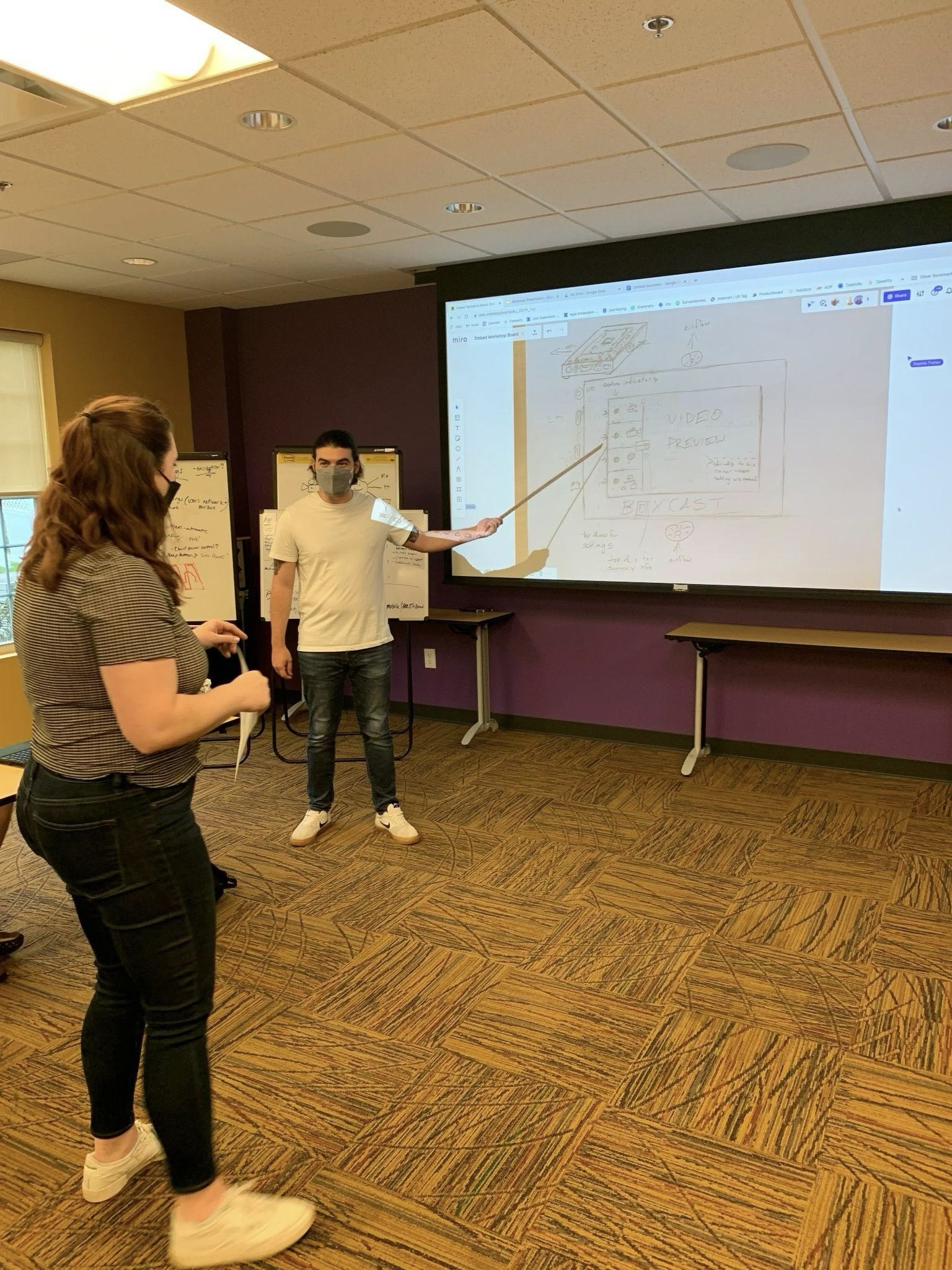
Teams apply UX principles directly to live initiatives, building both skill and immediate business value. I consult on approach and slowly transition research and design responsibilities to members of the team. Together we learn the theory of the research approach, watch as I conduct 1-2 sessions, and then they conduct the remaining sessions with constructive feedback.
Impact
These efforts positively impacted my most recent organization at the individual and the team levels. Increasing the UX activities on development projects increased the quality of releases and build trust in UX practices.
12
curated, reusable UX trainings and workshops created on research, design and content
400+
people trained in UX across multiple disciplines including product and engineering
⏭
Faster, more confident, data-informed decision-making allowing for faster iteration
⬆
Scaled UX involvement in development efforts from infrequent to almost always
“I learned so much working with you, and firmly believe that our work was pivotal in improving my system's user experience.”
— Product Owner about Usability Testing Experiential Learning Project
“[Alex's] leadership and strategic vision have been instrumental in not only fostering a deeper understanding of CX principles but also embedding them into our operational processes to improve service delivery and internal communication.”
— Solution Architecture Division Director on Scaling UX Maturity Effort
Want to see more of my work?