

Generative research for live streaming hardware encoder
Reduced risk and increased development speed for an expensive-to-develop product
Marketing video for the BoxCast Spark live streaming encoder
Overview
This project began the long process of developing the next generation of a live streaming hardware encoder. As the dedicated UX researcher for this effort, I:
Assessed the ambiguous and complex goal of building a new, amazing encoder for our users and executed a research plan that would best support my team’s gaps in knowledge and product deadlines
Conducted iterative rounds of qualitative interviewing and distilled 25 hours of research intro 250 addressable insights for the embedded hardware team
Trained the embedded hardware team on how to conduct their own research to increase the company’s UX capabilities moving into evaluative testing
The result: Through continued collaboration, we developed a deep, shared understanding of our users and the new encoding product, speeding up delivery, increasing clarity and reducing risk for this new encoder.
Goals
Gain clarity, make a key strategic decision, and provide direction to build and release new hardware that improves the BoxCast user experience.
Identify causes of frustration for users
Understand the variations in the problems users face to inform solutions
Evaluate opportunities for delight, fun, and ease to add value to the BoxCast service as a whole
Not familiar with live streaming? No problem! Check out some Live Streaming Basics at the bottom of this page to get some more context on this case study.
User Experience Researcher
Role
Hardware Live Streaming Encoder
Technology
Qualitative Interviewing, Findings Synthesis, Insight Generation, Workshop Facilitation, Repository Creation
Responsibilities
Embedded Hardware Agile Team: Product Manager, Engineering Manager, Hardware Engineers
Product Marketing and Sales
Company Leadership: Executive Board, UX Management
Stakeholders
4 months of continuous research
2.5 years in total to launch the product
Timeline
Challenge
BoxCast offered two different hardware encoders to customers before this effort. A low cost, somewhat outdated model and a high cost professional level device.
This offering left customers longing for modern features at a reasonable price, and often caused customers to purchase an encoding solution from a competitor.
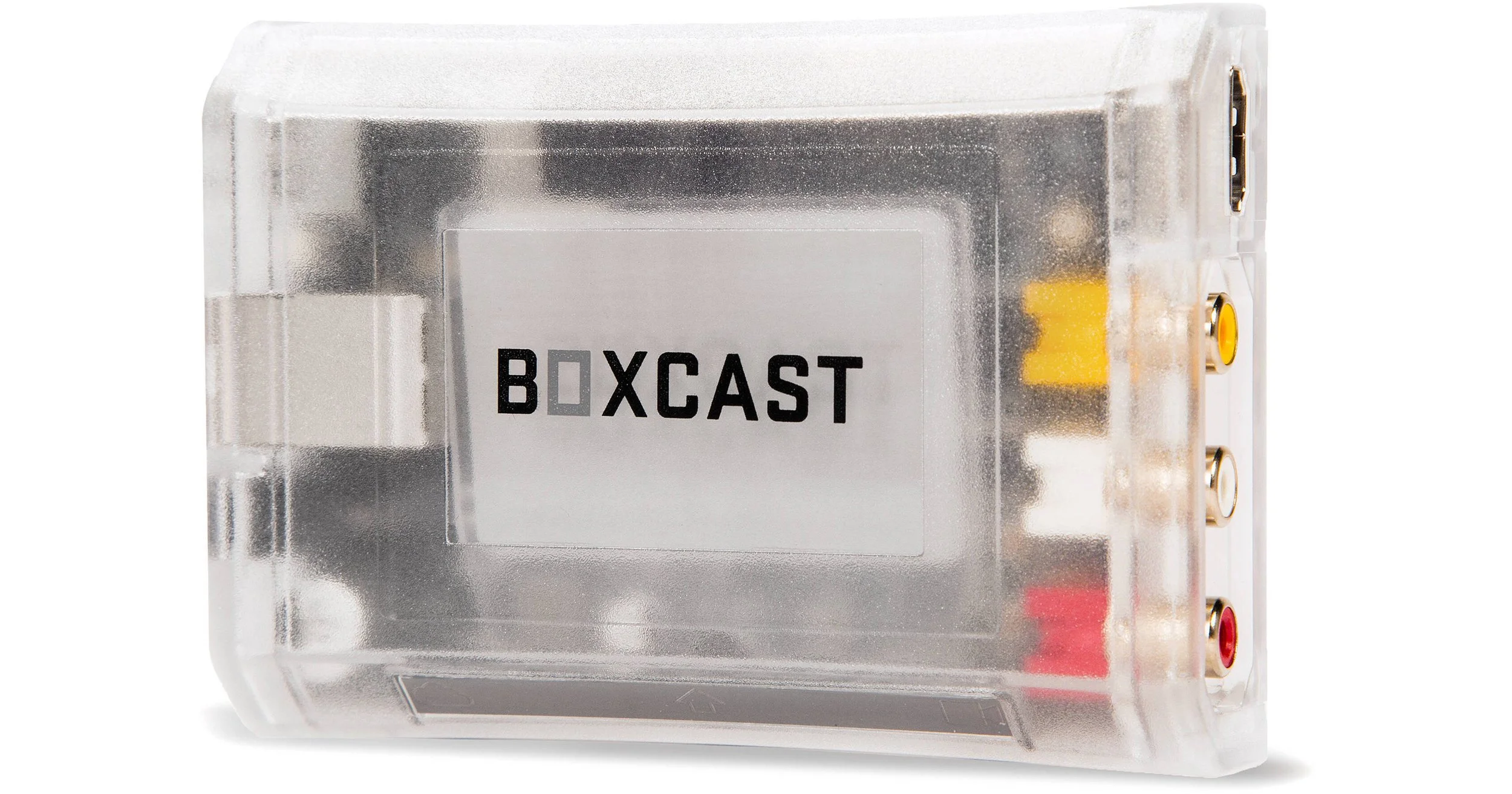
BoxCaster, $399
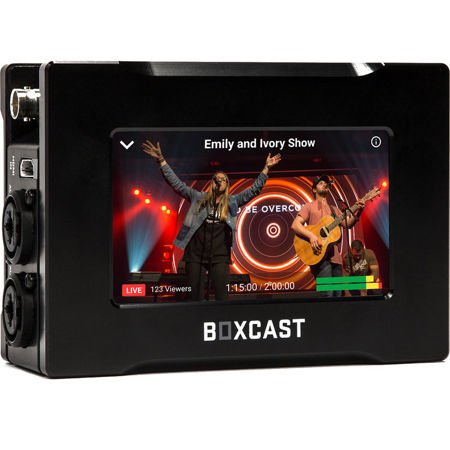
BoxCaster Pro, $3,495
Approach
Qualitative Interviews
1
3 iterative rounds collecting 25 hours of qualitative interviews
Shared over 250 insights with the team over two virtual sessions
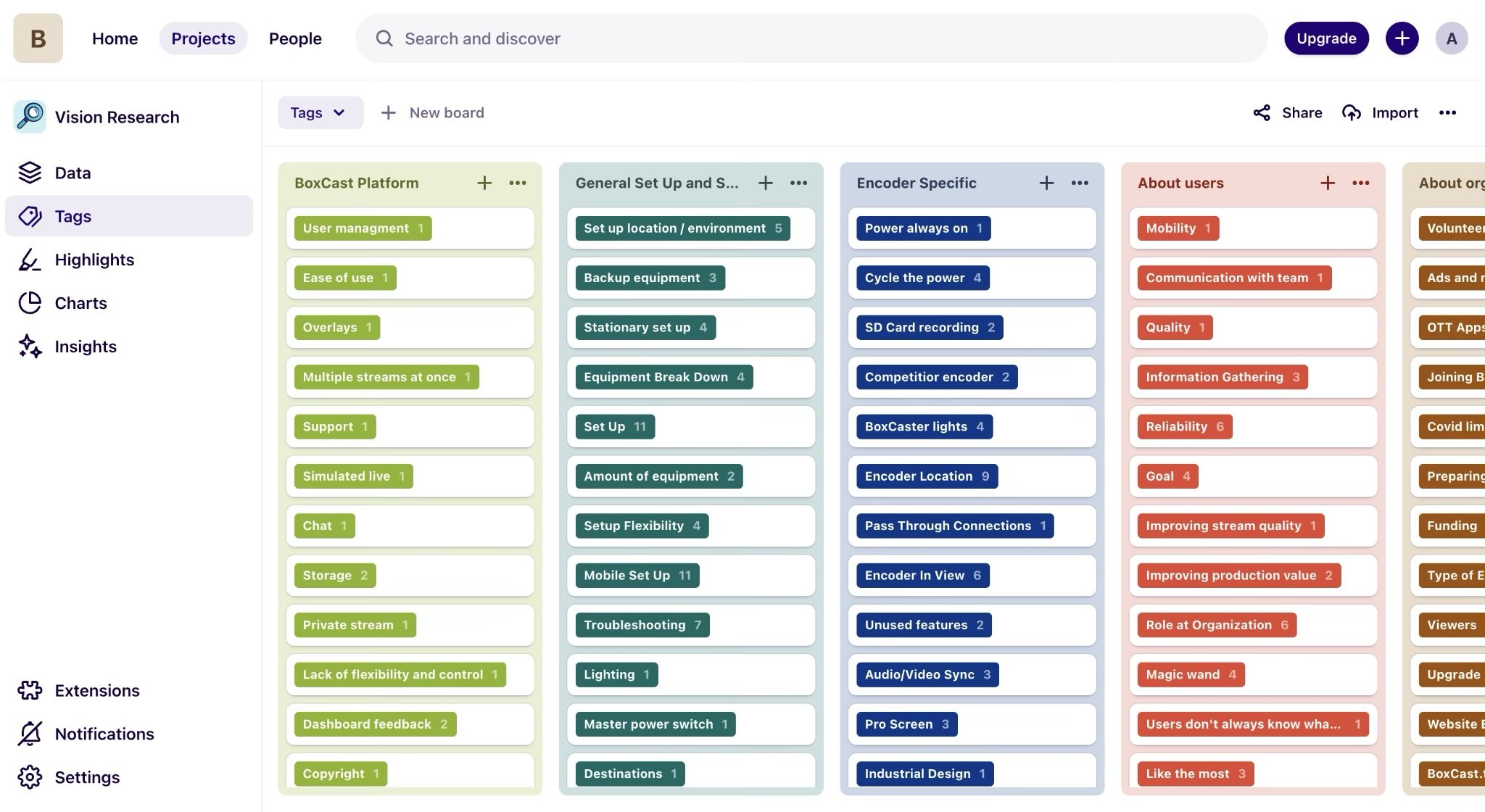
Findings Workshop
2
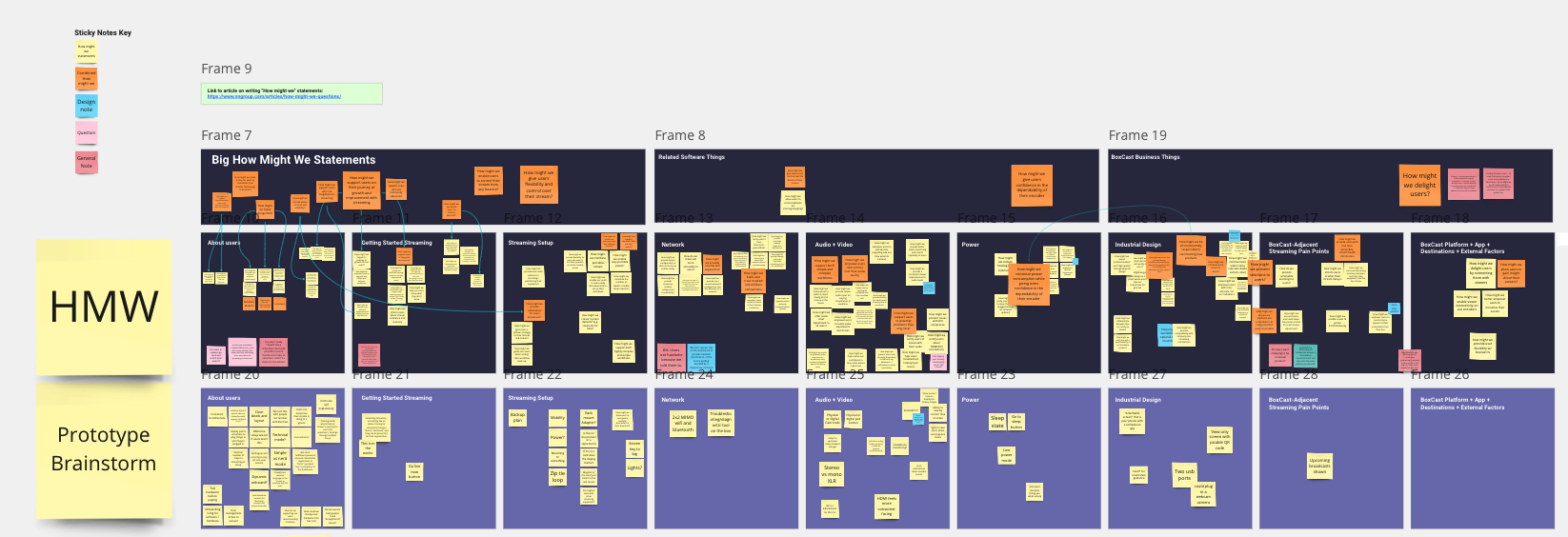
Met for two days in person to discuss and ideate over findings
Reviewed findings to generate ideas around what a new encoder could be
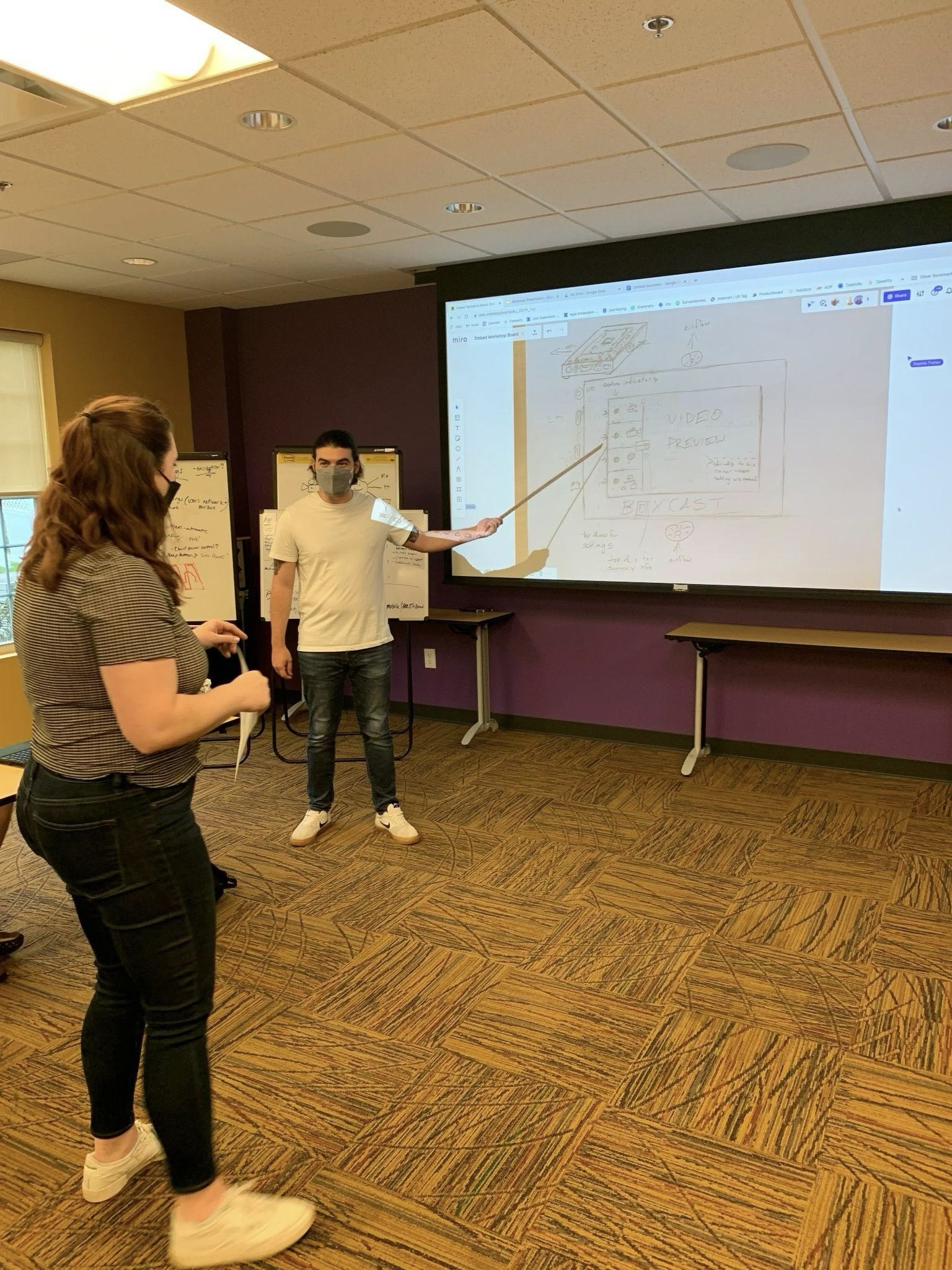
Paper Prototyping
3
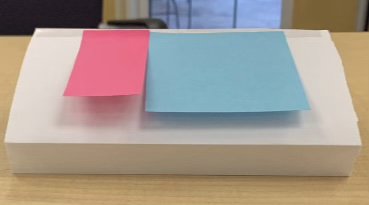
Rapid iteration allowed team to align on rough physical specs and necessary ports
Aligned around a paper prototype, the team jumped to technical design in record time
Impact
This generative study was just the beginning. Insights collected during this study were shared company-wide and showed the value of early generative research.
100+
Insights collected and shared to improve existing and future releases of hardware and software
+
Changed team’s work process to include iterative research and conduct research independently
⬇
Decreased risk by focusing on users problems and competitive features in key markets, ensuring fit
⏭
Increased focus on real user problems and shared team understanding allowing for faster development
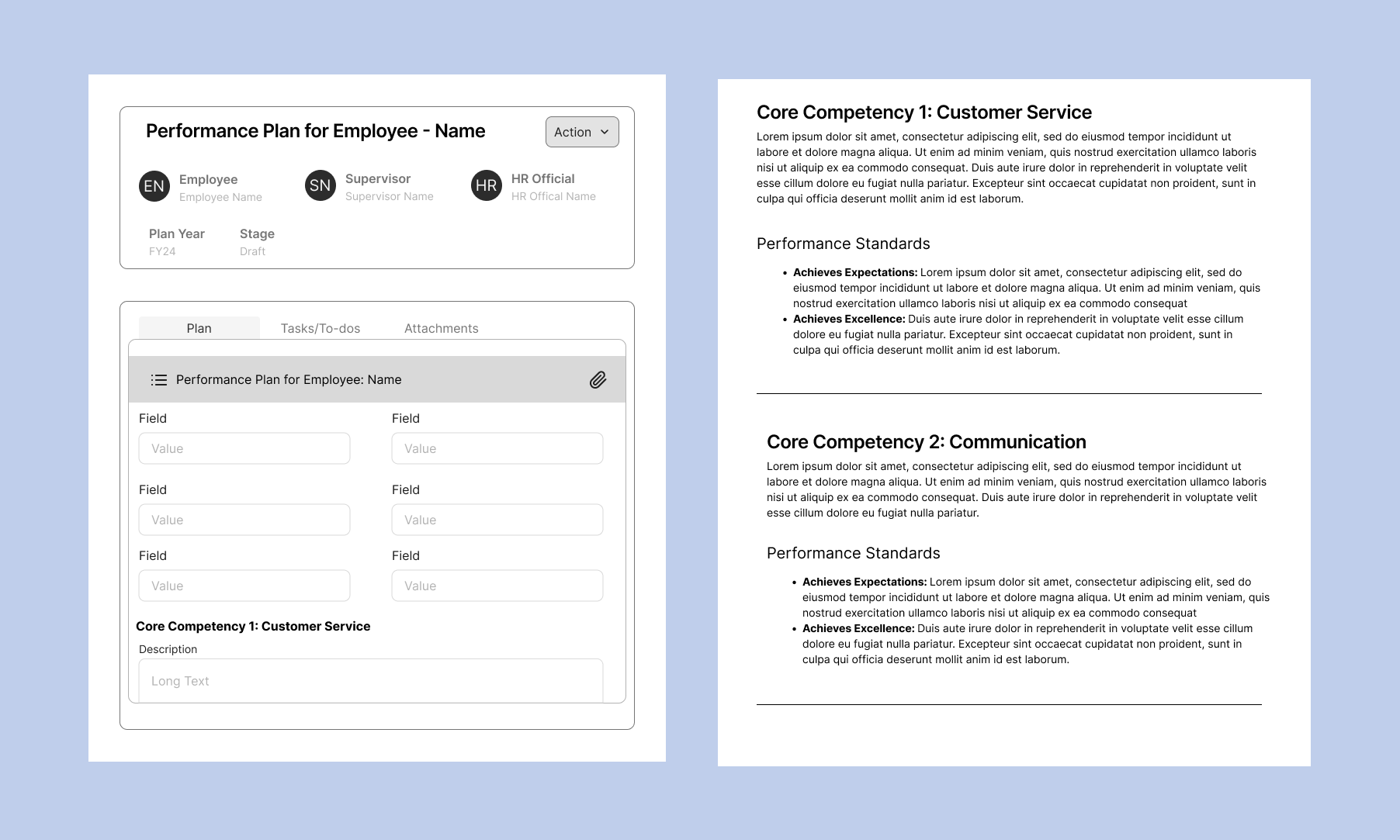
Want to see more of my work?
Live Streaming Overview
Not familiar with live streaming or hardware encoding? No problem! Here’s some basics to provide some context around this research and show why it is more complex than a few rounds of interviewing about a product.
-
Encoding is the process of compressing large video files for easier uploading to the internet. Broadcasters who use video cameras in their live streaming setup need either a hardware or software encoder for the job.
-
A hardware encoder takes a feed from your camera and audio sources or your video mixer into a physical box. A hardware encoder connects directly to the internet to send the feed.
-
For users who live stream frequently using a software encoders means setting up from scratch each time they broadcast an event. The extra time, sometimes up to an hour, can be a burden on a small production team.
With hardware encoders, a live streaming setup is more repeatable. The equipment can stay in place, connected and automate many parts of the process. Combined with pre-broadcast scheduling, hardware encoders simplify user’s lives.
-
People and organizations that stream regularly. The primary customers for this particular hardware encoder are churches who stream at least once a week.
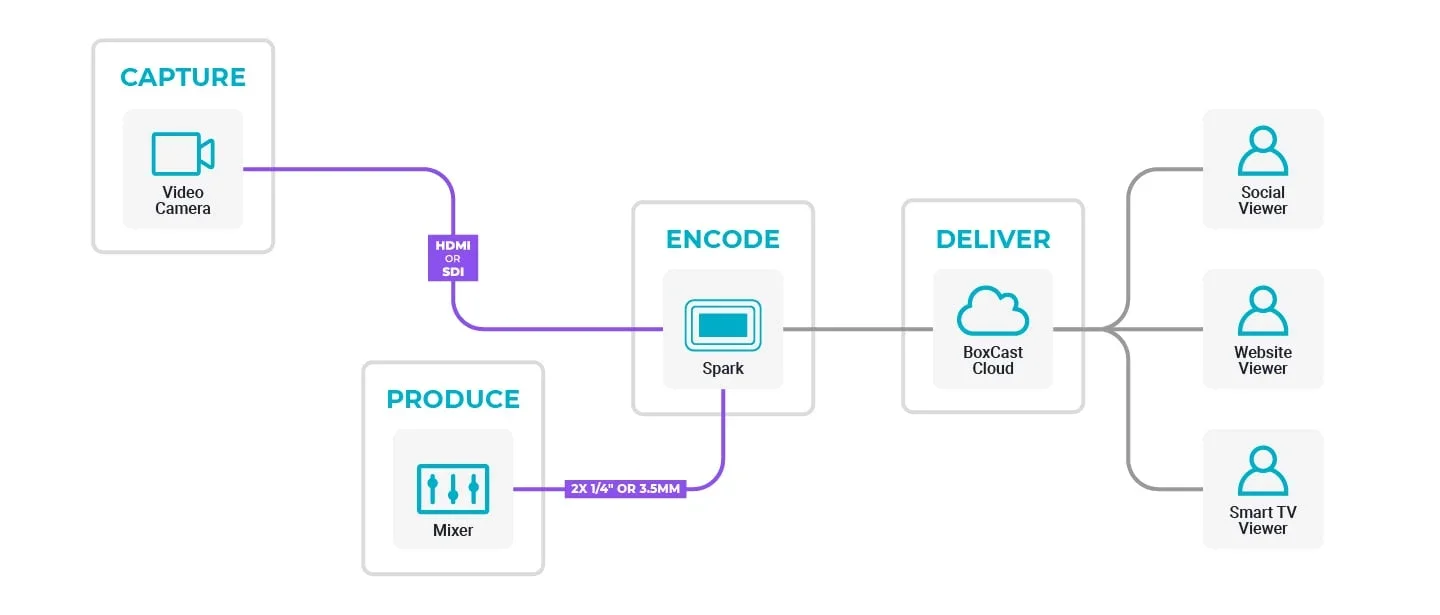
Single Camera Live Streaming Set Up Diagram
The hardware encoder is in the middle with inputs from the camera, sound and internet (not pictured) to send the feed to viewers on platforms like Facebook and YouTube.